Data-Driven Strategies for Late-Night Study Sessions
In the high-stakes environment of modern higher education, the “all-nighter” has become a rite of passage. However, recent neurobiological data suggests that the traditional fuel for these sessions—sugary energy drinks and processed fast food—is actually a recipe for academic underperformance.
Also Read: Why Birthday Greeting Ecards Are Replacing Traditional Paper Cards
According to a study published in the Journal of Evidence-Based Integrative Medicine, students who consume high levels of saturated fats and refined sugars show a measurable decline in memory task performance within just 72 hours. To succeed, students must treat their brains like high-performance engines. This requires a shift from “eating for fullness” to “eating for focus.”
The Glucose Trap: Understanding the Data
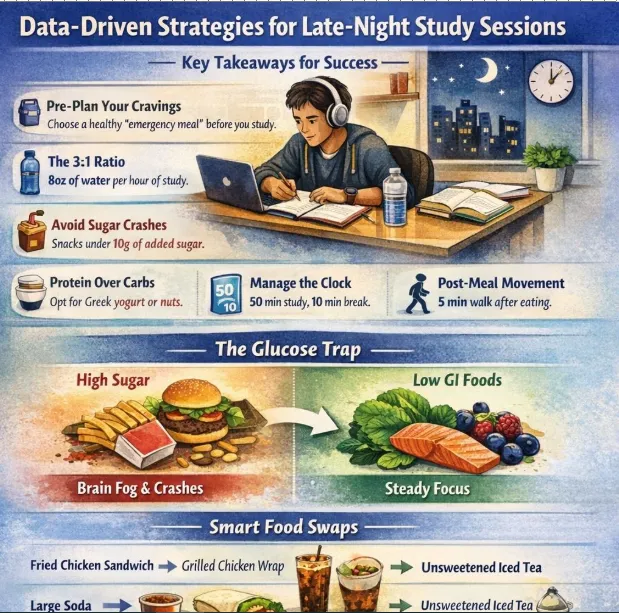
The brain is a glucose-dependent organ, but the source of that glucose determines your cognitive longevity. A study by the American Journal of Clinical Nutrition found that high-glycemic-index (GI) foods (like the white bread and sugary toppings often found on standard fast-food menus) cause a rapid spike in blood sugar followed by a “hypoglycemic dip.”
This dip triggers the release of adrenaline and cortisol, leading to “brain fog” and increased anxiety. Conversely, low-GI foods provide a steady stream of fuel, allowing for sustained concentration for up to four hours.
Strategic Ordering: Using Price Data to Your Advantage
When studying late, convenience often wins over home cooking. However, being a “convenient eater” doesn’t have to mean being an unhealthy eater. Smart students analyze restaurant offerings and price data before they order to avoid the “hunger-driven” impulse buy.
Data shows that making a decision before you are starving leads to 25% healthier choices. By browsing current menu prices and nutritional data online, you can identify high-protein, low-sodium options that won’t leave you bloated and tired.
Data-Backed Fast Food Swaps:
- Instead of a Fried Chicken Sandwich: Opt for a Grilled Chicken Wrap (Reduces saturated fat by 60%).
- Instead of a Large Soda: Choose Unsweetened Iced Tea or Sparkling Water (Saves an average of 65g of sugar).
- Instead of French Fries: Look for sides like black beans, apple slices, or baked potatoes (Increases fiber intake by 4-5g).
The “Focus Five”: Nutrients Proven to Boost GPA
Research from the National Institutes of Health (NIH) has identified specific nutrients that directly correlate with improved cognitive processing:
- Lutein and Zeaxanthin: Found in leafy greens. These improve visual processing speed.
- Flavonoids: Found in dark chocolate and berries. A 2020 study showed that flavonoids increase blood flow to the hippocampus.
- Omega-3 Fatty Acids: Critical for maintaining the structural integrity of brain cells.
- Tyrosine: Found in chicken and eggs; it is a precursor to dopamine, which helps with motivation.
- Magnesium: Found in pumpkin seeds and almonds. It helps regulate the stress response.
Hydration and the 2% Rule
Even mild dehydration—defined as a 2% loss of body water—can result in a 10% decrease in cognitive performance. A study by the University of East London found that students who brought water into exam halls performed 5% better than those who didn’t. During late-night sessions, the “thirst mechanism” is often mistaken for hunger. If you feel an intense craving for a late-night burger, try drinking 16 ounces of water first.
Managing the Workload to Reduce “Stress Eating”
The primary driver of poor dietary choices is academic stress. When a student is overwhelmed by the sheer volume of research or formatting required for a major project, the body enters “survival mode,” craving high-calorie foods to cope with the perceived threat.
To combat this, successful students focus on technical efficiency. By utilizing free academic tools for tasks like bibliography generation and equation solving, you can lower your cortisol levels and save time.
Furthermore, checking high-quality academic samples allows you to understand complex assignment structures quickly. This streamlined approach reduces the time you spend in a high-stress, “hunger-inducing” state, making you less likely to binge on junk food to cope with a mounting workload.
Budgeting for Brain Power
A common myth is that healthy eating is too expensive. However, a price analysis of major fast-food menus shows that “value meals” often cost more than a combination of healthy a-la-carte items. Comparing the “cost-per-nutrient” of various chains ensures you spend your limited budget on food that actually helps you pass your classes rather than just filling a void.
Resources
- USDA MyPlate: Official guides for balanced nutrition and portion control for young adults.
- The Nutrition Source (Harvard): Comprehensive data on foods that improve long-term brain health.
- Google Scholar: Use this to find peer-reviewed data on nutritional neuroscience and GPA performance.
Conclusion
Balancing a heavy course load with a healthy diet is a competitive advantage. By using data to guide your food choices and streamlining your study process with the right tools, you ensure that your late-night sessions are productive, efficient, and successful.
Frequently Asked Questions (FAQs)
Q: Is coffee a good study aid for late-night sessions?
In moderation, yes. However, data suggests that consuming caffeine more than 6 hours before sleep can disrupt REM cycles, which are essential for memory consolidation. Stick to water or green tea after midnight.
Q: Are “zero-calorie” energy drinks better for studying?
While they avoid the sugar crash, many contain artificial sweeteners that can disrupt gut health and lead to headaches. Natural sources of energy, like Vitamin B12 and complex carbs, are more sustainable.
Q: How can I eat healthy when all the healthy restaurants are closed?
This is where pre-planning is key. Keep “emergency” brain foods like walnuts, dark chocolate, and Greek yogurt in your dorm or apartment for when local options are limited to fast-food chains.