Cómo se comunican en los restaurantes de España: guía práctica para cocineros mexicanos
Working in a restaurant in Spain is an enriching experience, both professionally and culturally. However, while many culinary concepts are similar, the way colleagues communicate can differ considerably from Mexico. In this article, I’ll explain how internal communication works in the kitchen and dining room, what kind of radios they use to coordinate, the common jargon, and some aspects of Spanish gastronomy that will help you integrate more easily.
Before going into detail about communication, it’s important to mention that many restaurants—especially large chains, hotels, and catering services—use wireless communication systems to coordinate activities between the dining room and the kitchen: from confirming that a table is ready to managing service times, special orders, or emergency situations. Many professionals use specialized radio devices that operate on unlicensed frequencies and are easy to use even without in-depth technical knowledge of radio communication. You can find more information and models of practical devices at binoculars-telescopes.com.
Daily communication in the kitchen and dining room
In Spanish restaurants, communication between teams follows two main paths:
1. Direct verbal communication
In medium and large kitchens, it’s common for head chefs or sous chefs to maintain constant communication with the cooks. They use direct and clear language, with short sentences to save time.
- “Ready lid”
- “Dish 12 in two minutes”
- “I need two more servings of rice.”
- “Table 5 demands the wine”
In many cases, cooks know basic terms in English or even French, due to the influence of international techniques, but in general communication is done in Spanish with local idioms.
2. Communication through signals or codes
In some more sophisticated restaurants or those with large dining rooms, short signals or keywords can be used to expedite operations without disrupting the flow. For example, the word “run” might mean that an order should be prioritized, or “serve” might indicate that a dish needs to be brought out immediately.
In addition, there are set phrases or verbal routines that are passed down from generation to generation within the culinary profession in Spain, such as:
- “Entrance frame” to indicate that a dish should be ready soon.
- “Take a point” to tell a colleague to check or finish something.
Use of walkie-talkies and PMR frequencies in restoration
Many restaurants use portable radios to maintain communication between the dining room, kitchen, and reception. This is especially useful in multi-story or large-space establishments, such as hotels or high-volume restaurants.
The most common and legal frequency for this type of unlicensed professional communication in Spain is PMR446 (Personal Mobile Radio 446 MHz). These are the main characteristics:
- It is a free band , meaning it does not require a license to use it.
- It does not allow very high transmission power, which prevents interference with other services.
- The devices are usually compact, robust and have long-lasting batteries, perfect for constant movement in a restaurant.
Many cooks, waiters, and managers program specific channels for their shift, making it easier for them to hear only relevant communication. For example:
- Channel 1: kitchen-dining room coordination.
- Channel 2: Order distribution.
- Channel 3: emergencies or special announcements.
What radios are used and why?
The most popular brands in professional settings are those that combine good audio quality, durability, and battery life. Some valued features include:
- Water and shock resistance , because kitchens can be harsh environments.
- Multiple channels and the ability to program specific codes for different equipment.
- Headphones or external microphones that allow coordination without interrupting the service.
Many restaurants also use mobile applications connected to the ordering system, although traditional radio remains very popular due to its immediacy and simplicity.
Example of communication flow in a typical service
Imagine a Spanish restaurant in Madrid or Barcelona at peak time:
- In the dining room , the head waiter sees that a table is ready to order.
- He picks up the walkie-talkie and announces: “Kitchen, table 8 ready to order, change . ”
- In the kitchen , the boss hears the signal and responds: “Received, we are preparing the order for table 8, change . ”
- When the dishes are ready to be served, the cook announces: “Table 8 is leaving, change . ”
- The waiter collects the plates and makes sure everything is perfect before taking them away.
This type of rapid communication avoids confusion and helps to synchronize times between the kitchen and the dining room, something fundamental in any efficient restaurant.
Slang and common expressions in Spain
When you move to Spain, you’ll notice that some local expressions may sound different from those you know in Mexico. Here are some helpful examples:
| Expression in Spain | Approximate equivalent |
|---|---|
| Waiter/Waitress | Waiter/Waitress |
| Kitchen | Kitchen |
| Dish of the day | Dish of the day |
| Letter | Menu (although “menu” is also used for a fixed menu) |
| Service | Service |
| Ration | Shared portion or dish |
In addition, in cooking it is common to use diminutives or quick commands such as:
- “A little more salt” → “A little more salt, please”
- “Hurry up” → “Run, please” (always respectfully, never aggressively)
Typical Spanish food: what you should know
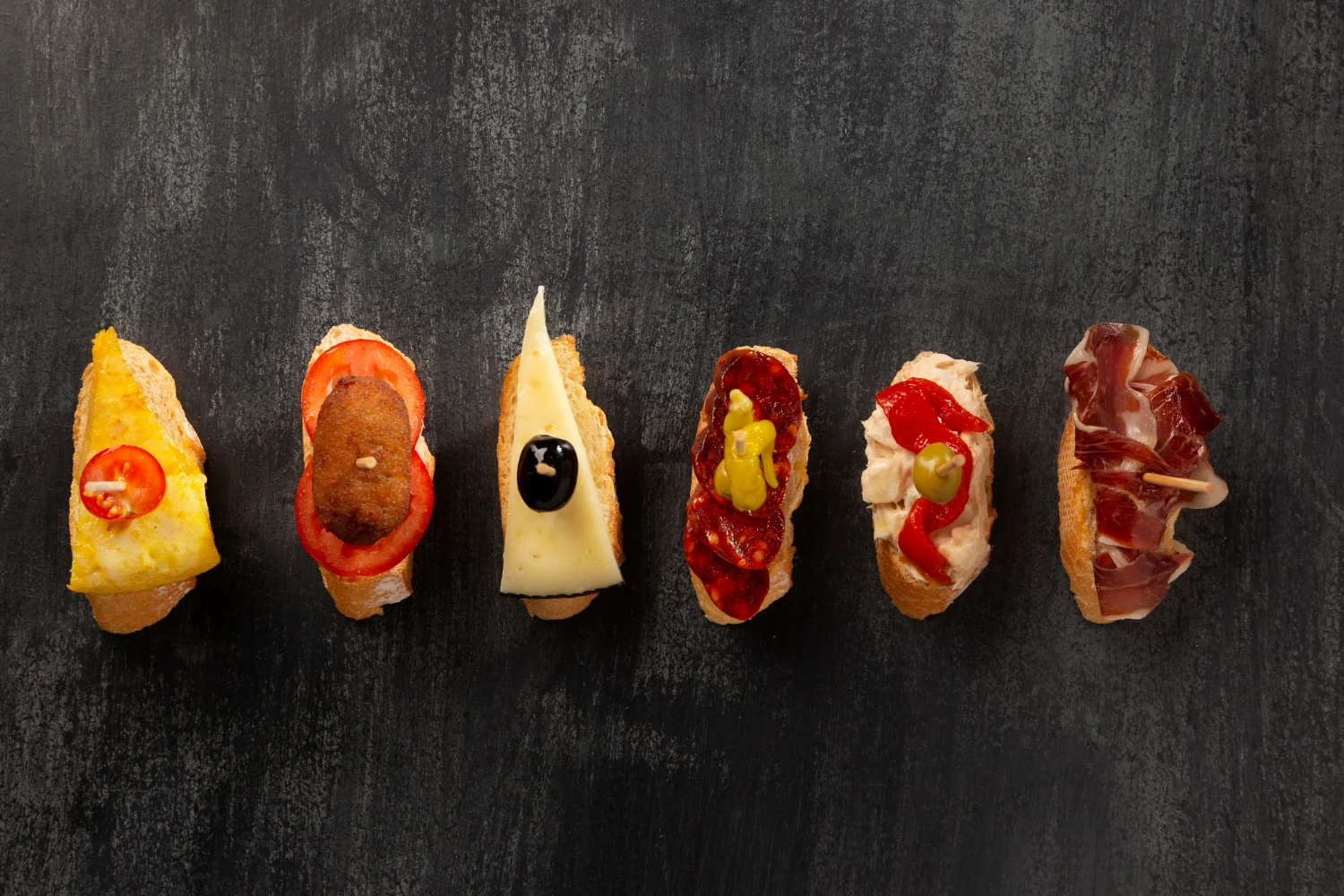
In addition to improving your communication skills, learning about Spanish cuisine will enrich your experience and help you interact better with colleagues and clients. Spain has a diverse and rich cuisine, with traditional dishes that vary by region, but some that you’re sure to find in many restaurants are:
Tapas and portions
Tapas are small portions of food that are commonly served with drinks. Some popular ones include:
- Spanish omelet (egg with potatoes and onion)
- Patatas bravas (potatoes with spicy sauce)
- Croquettes (filled with ham, mushrooms or fish)
- Padrón peppers (small peppers, some are hot and some are not)
Classic dishes
- Paella : rice cooked with saffron, usually accompanied by seafood, chicken or vegetables.
- Gazpacho and salmorejo : perfect cold soups for summer.
- Galician-style octopus : octopus with paprika and olive oil.
- Fabada asturiana : a bean stew with chorizo and bacon.
Charcuterie and cheese board
Spanish cured meats such as Iberian ham , chorizo , lomo and cheeses such as Manchego are staples in many tapas or appetizer menus.
Typical desserts
- Churros with chocolate
- Custard
- Santiago Cake
Knowing these dishes will not only help you understand orders, but also allow you to exchange ideas with colleagues about preparation, ingredients, and presentation.
Final tips for Mexican cooks
- Learn local expressions : although Spanish is the same language, there are variations worth knowing in each region.
- Familiarize yourself with radio systems : PMR frequency walkie-talkies are very common and may be a requirement in large environments.
- Adapt to the culinary jargon of each cuisine, which often mixes local terms with international influences.
- Observe and ask : the best way to integrate is to observe how your colleagues communicate and ask them to explain any phrases or codes you don’t understand.